The Sport of
Rally Scrambling
A niche outdoor sport combining the raw, instinctual movement of rock scrambling with the strategic depth and speed of rally racing — wrapped in the expressive culture of cosplay and motorsports.
"Dumb" Flow
Rally Scrambling rejects the intense specialization of other outdoor sports. It is about achieving "dumb" flow — the pure, unadulterated joy of moving through a complex environment quickly and creatively, without overthinking.
It prioritizes accessibility, expression, and the primal fun of full-body movement in nature. The terrain is the puzzle, but there is no single solution.
"...tie your mountain shoes firmly over the instep, and with braced nerves run down without any haggling, puttering hesitation, boldly jump from boulder to boulder with ever increasing speed."
— John Muir, The Mountains of California (1894)
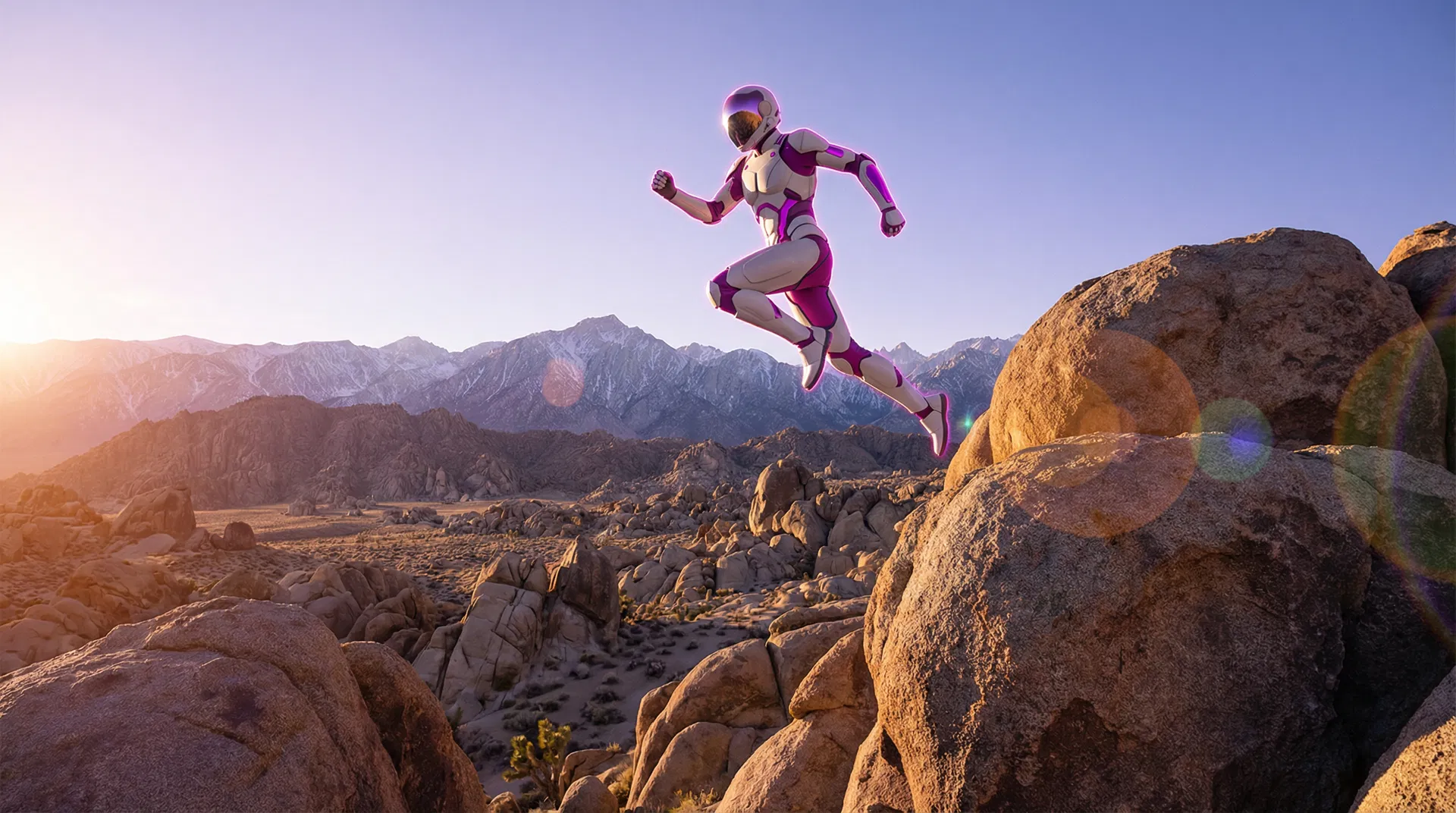
"Talus running is the bouldering of the mountaineer."
— Doug Robinson, 1975Natural, Un-Pathed Terrain
Courses are defined only by a starting point and a finishing point. No marked route. Typically YDS Class 2 boulder or talus fields, between 200 and 800 meters in length.
Boulder Fields
Large, stable rock formations requiring route-finding and full-body movement
Talus Slopes
Loose rock debris demanding quick decisions and precise foot placement
Rocky Ridges
Exposed terrain with elevation changes and multiple viable lines
The Team Dynamic
Rally Scrambling can be performed solo or in the Paired Class with a strategist.
The Scrambler
The athlete physically navigating the course. Speed, agility, creative line-finding, and aesthetic expression all in one.
- —Navigates the terrain in real-time
- —Chooses lines based on instinct and guidance
- —Wears gear appropriate to their class
- —Scored on Speed, Fit, Expression
The Line-Caller
The strategist who performs reconnaissance of the course and provides real-time guidance via helmet-to-helmet radio.
- —Performs course rece before the event
- —Guides via radio communication
- —Technology encouraged: tablets, GPS, AI drones
- —In Team Blitz, manages 4 athletes simultaneously
Competitive Formats
The Blitz
New in v1.2Mass-start format with up to 100 competitors launching from a wide starting arc toward a single finish line. Available in Free-for-All or Team mode (25 teams of 4 Scramblers + 1 Line-Caller).
Time Trial
ClassicThe standard format. Competitors or pairs start individually at staggered intervals and race against the clock. Pure speed and line-finding.
Convergence (Grand Prix)
Grand PrixMulti-stage, multi-racer format. Teams start from different points around the perimeter and race toward a single central finish line. Scored by placement across stages.
How Scoring Works
Four scoring dimensions capture the full spectrum of performance.
Speed
ObjectiveFastest time from start to finish. The primary measure.
Fit
SubjectiveCreativity, cohesiveness, and functional integration of gear.
Expression
SubjectiveCreative line choices, acrobatic movements, and overall flow.
"Dumb"
OptionalTaskmaster-style challenge. Bizarre secondary objectives.